
Sustainable Valve Management for Brownfield Asset on Norwegian Continental Shelf Extending Operations for Decades to Come
See how ValveTrack™ replaced spreadsheet-based subsea valve tracking to ensure TCD-compliant, traceable, and controlled subsea valve operations.
THE QUICK OVERVIEW
WHO: International Energy Operator and independent Vessel Contractor
WHAT: Sustainable solution for subsea valve Management
WHERE: One of the oldest producing fields on the Norwegian Continental Shelf
HOW: Implemented ValveTrack™ as a dedicated system used by both the Operator and Vessel Contractor for planning, executing, and documenting valve operations.
WHY: To replace spreadsheet-based valve management with a more sustainable solution supporting long-term field operations toward 2050. The existing Excel approach did not adequately meet the Technical Controlling Document (TCD) requirements for integrity, traceability, and controlled execution of subsea valve activities. A dedicated system was needed to enable smarter, more robust valve status management.
Introduction
Operating subsea assets over decades requires strong control, traceability, and consistent processes. In the producing field on the Norwegian Continental Shelf, the Operator identified limitations in its spreadsheet-based approach to subsea valve management, particularly around version control, data integrity, and compliance with Technical Controlling Document (TCD) requirements.
To support field operations for decades to come, the teams implemented ValveTrack™ as a dedicated system for planning, executing, and documenting subsea valve operations, replacing fragmented Excel workflows with a unified platform that improves traceability and operational control.
Challenges
The spreadsheet-based process created recurring uncertainty around which file represented the latest revision. When confidence in valve status was reduced, teams often had to re-check valves offshore to verify conditions. Depending on the operation, such rework could result in up to 12 hours of additional vessel time.
In addition, maintaining one Excel file per operation required approximately 2–4 hours of engineering time from onshore representatives. Multiple stakeholders, including offshore supervisors, contractor personnel, and operator engineers were involved in updating and distributing files. Limited traceability made it difficult to track who made changes and when, reducing overall trust in the data and falling short of TCD expectations for documented integrity control.
Solution
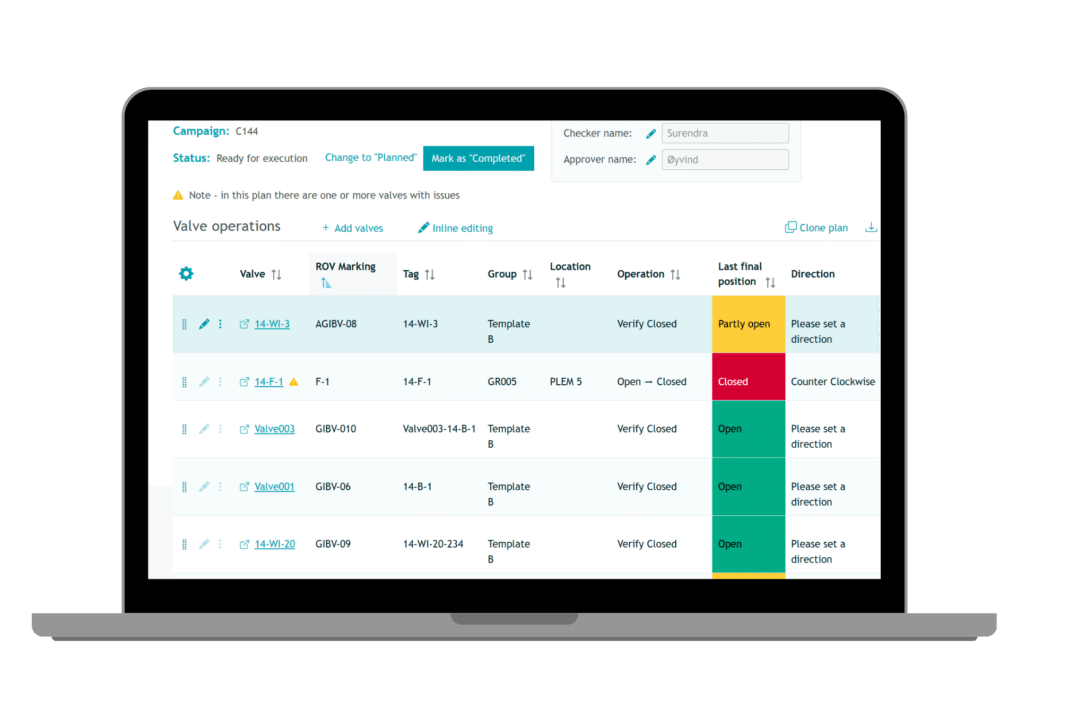
ValveTrack™ was implemented as a dedicated valve management application used jointly by the field Operator and Vessel Contractor. It replaced fragmented Excel workflows with one unified and robust application for planning, executing, tracking, and documenting subsea valve operations.
All three internal departments: Subsea, Wells, and Project teams are using different vessels operating in parallel work within a unified and standardized system, ensuring consistent data handling. Access to the last updated valve status, historical information in previous logs, and dynamic P&IDs improved transparency and ensured that valve control aligned with the Operator’s TCD requirements.
Objectives
The primary objective was to replace spreadsheet-based valve monitoring with a sustainable digital solution supporting long-term field operations toward 2050 in the producing field.
Additional objectives included:
- Achieving documented control and integrity of subsea valves in accordance with the Operator’s Technical Controlling Document (TCD) requirements
- Reducing vessel time caused by uncertainty of valve status
- Minimising engineering hours spent maintaining spreadsheets
- Establishing a common platform for operator and contractor
- Standardising valve management across teams and vessels
Results
Implementation of ValveTrack™ created a sustainable digital foundation supporting long-term operations toward 2050 and delivered concrete operational improvements:
- Up to 12 hours of vessel time avoided per campaign by eliminating uncertainty related to Excel revisions
- 2–4 engineering hours saved per operation previously spent manually maintaining spreadsheets
- Established a TCD-aligned valve management process with documented traceability and version control
Conclusion
While Excel-based workflows can function for basic documentation, they do not provide the traceability, version control, or integrity assurance required for subsea operations governed by strict technical and safety standards, particularly in a long-term field context.
By implementing ValveTrack™, the Operator strengthened its existing TCD-compliant process for documented control of subsea valve status. The solution supports more sustainable field operations. It enables structured collaboration with the Vessel Contractor, reducing unnecessary vessel time and engineering workload. It also establishes a consistent digital process for valve status management across fields and campaigns — supporting decades of continued operation.
Questions about ValveTrack?
Our team works closely with operators and contractors every day. Get in touch to see how ValveTrack can work for your project.